












A Guide to Restroom Privacy: Enhancing Security, Privacy, and ADA Compliance
Oct 20, 2026 | 10:26 Pm PST
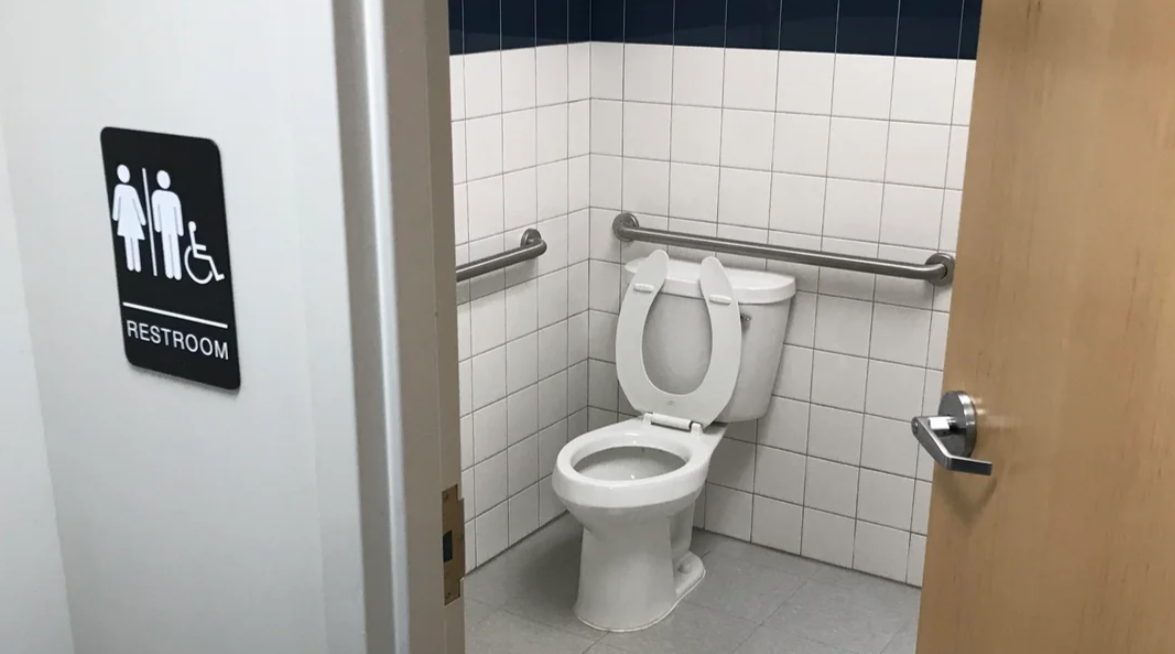
For a commercial facilities manager, a building’s restrooms are a frequent source of hidden operational headaches. While major infrastructure like HVAC systems and elevators get the bulk of the maintenance budget, it is often the smallest touchpoints that define a tenant's daily experience.
Among those touchpoints, restroom door hardware carries an incredibly high stakes burden. It is directly responsible for managing three critical pillars of facility management: building security, occupant privacy, and regulatory compliance.
When restroom door hardware falls short, it leads to two scenarios every facility manager dreads: embarrassing privacy slip-ups that frustrate occupants, or costly code violations during an inspection.
Here is a practical guide on how to evaluate your current restroom hardware setup to enhance security, privacy, and accessibility seamlessly.
1. The High Cost of the "Door Jiggle" (The Privacy Problem)
We have all experienced it: you walk down a corporate hallway, arrive at the restroom, and stare at a tiny, scratched-up status window trying to determine if it says "Vacant" or "Occupied." Inevitably, you end up jiggling the handle or knocking awkwardly.
For the person inside, that sudden door jiggle is an immediate breach of perceived privacy. For high-end medical clinics, law firms, boutique restaurants, and corporate headquarters, this clunky interaction actively degrades the premium experience you are trying to cultivate for clients and employees.
Traditional indicator locks come up short because their visual status windows are simply too small. If a user has to stand inches from the door just to read its status, the hardware has already failed its primary job as a visual signal.
2. Navigating ADA and Life-Safety Codes (The Compliance Problem)
Upgrading your restroom privacy cannot come at the expense of strict accessibility guidelines. Facility managers must ensure that any privacy latch or deadbolt system strictly adheres to the Americans with Disabilities Act (ADA) standards:
Operable Parts: Section 404.2.7 of the ADA standards states that door hardware must be operable with one hand and must not require tight grasping, pinching, or twisting of the wrist.
Force Requirements: The force required to activate operable parts (including turning a privacy latch) must be 5 pounds maximum.
Emergency Egress: Life-safety codes require that restroom locks must allow for immediate, unhindered egress from the inside in a single motion, while simultaneously providing a reliable method for facility staff to unlock the door from the outside in an medical emergency.
When building engineers swap out standard locks for generic, non-commercial hardware to solve a privacy issue, they often accidentally introduce non-compliant twisting mechanisms or multi-step locking procedures that fail local building inspections.
3. Maintaining Architectural Integrity (The Security Problem)
Shared commercial restrooms require heavy-duty, grade-1 or grade-2 architectural hardware to withstand hundreds of cycles a day. Flimsy retail-grade locks or adhesive plastic signage quickly break down under heavy commercial use, leading to frequent maintenance tickets and compromised building security.
Furthermore, facilities often standardize their door prep for specific, proven locking chassis—such as the industry-standard Schlage B571 deadbolt—to maintain a uniform security profile across the entire property portfolio.
By upgrading to a high-visibility indicator system, facility managers achieve an elegant operational trifecta:
Flawless Privacy: Occupants can clearly see if a restroom is occupied from up to 300 feet down a corridor, completely eliminating hallway wait times and awkward door-jiggling.
Code-Compliant Hardware: Premium systems mount directly onto robust, ADA-compliant commercial deadbolts, ensuring your facility passes inspections with flying colors while maintaining standard emergency-access bypasses.
Industrial Durability: By syncing with enterprise-grade lock chassis like the Schlage B571, the system withstands the rigors of high-traffic commercial environments without requiring constant replacement or repairs.
The Modern Alternative: Next-Gen Occupancy Indicators
To truly balance these three pillars, modern facilities are moving away from traditional, tiny status windows and shifting toward high-visibility occupancy indicator systems.
Instead of forcing users to walk all the way to the door to check a microscopic latch, next-generation systems utilize large, high-contrast, and often illuminated visual indicators that sync directly with heavy-duty commercial deadbolts.
Conclusion: Don't Overlook the Details
Your building's hardware tells a story about how much you value the comfort, privacy, and safety of your tenants. Upgrading your restroom door hardware from a passive, hard-to-read latch to a clear, commanding status indicator is a low-cost, high-impact project that immediately reduces maintenance complaints and elevates your property's operational standard.
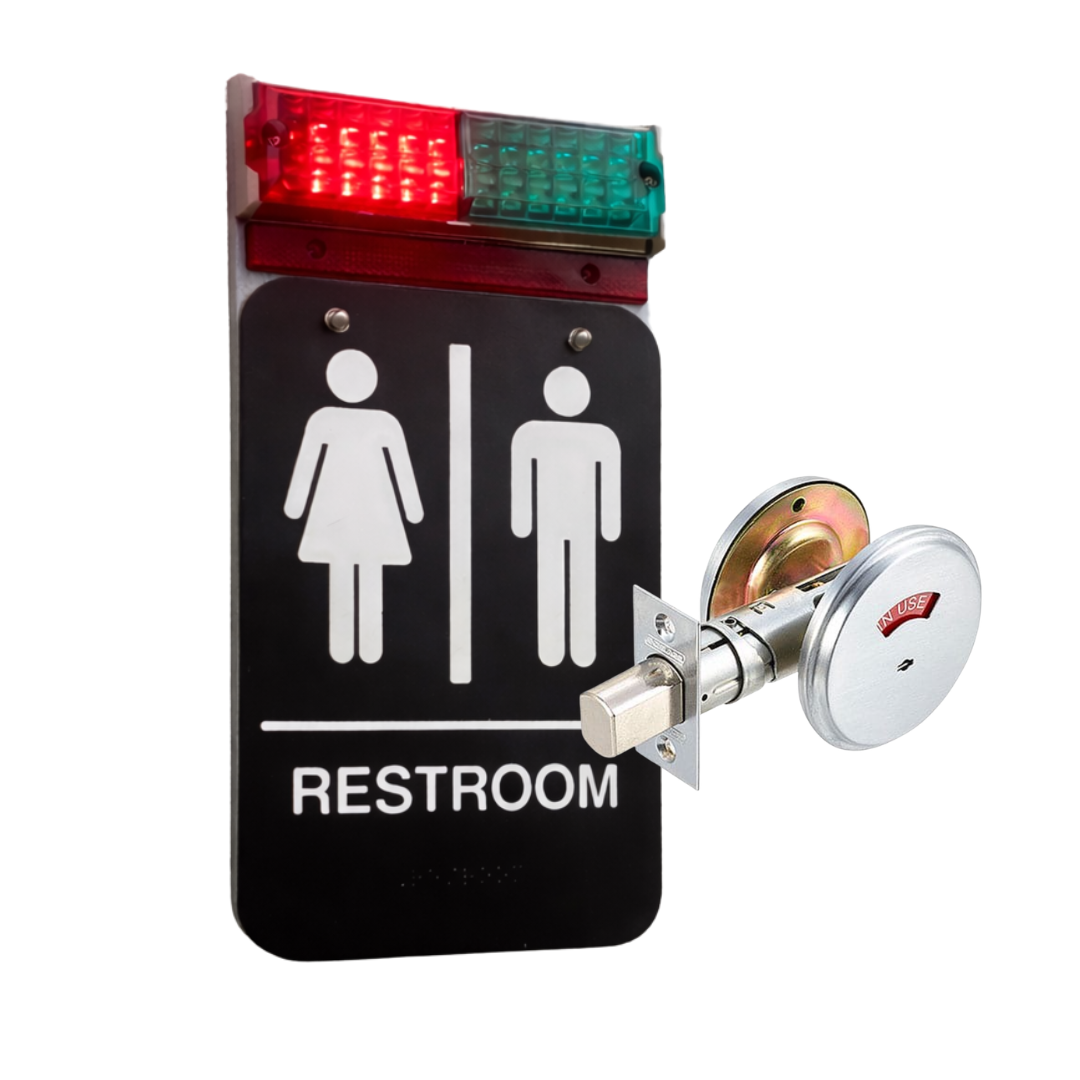

Heads Up Lock | Synced Restroom Occupancy System
Heads Up Lock is a heavy duty, 100% accurate hardwired system designed for absolute, zero-fault reliability. Experience occupancy visibility from anywhere with this ADA compliant, easy to install commercial upgrade.